

Exploring sustainability models for Aboriginal and Torres Strait Islander research in diabetes and cardiovascular disease
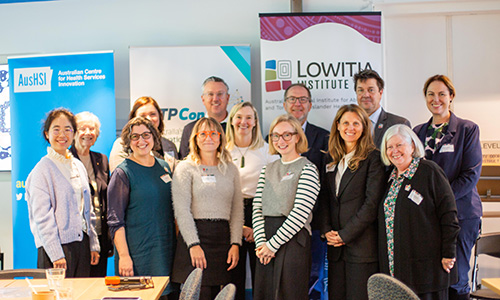
Photo: courtesy of Lowitja Institute
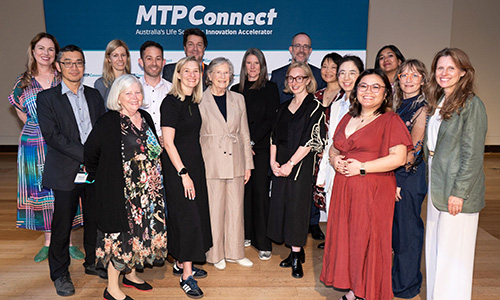
In December 2025, Dr Michelle Allen, Senior Research Fellow – Implementation Science and Megan Campbell, Operations Director at the Australian Centre for Health Services Innovation (AusHSI), travelled to Melbourne to represent the Centre at the MTPConnect Accelerator Showcase. MTPConnect is one of Australia’s Industry Growth Centres, first established by the Federal Government in 2015 to support the development of cutting-edge medical technology, biotechnology, pharmaceuticals and healthcare innovations.
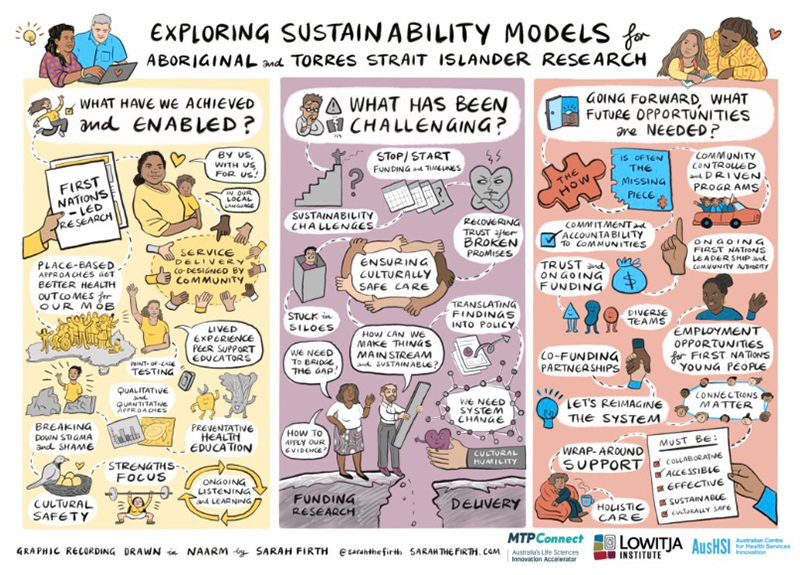
Preceding the Accelerator Showcase, on Monday 1 December, AusHSI partnered with MTPConnect and Lowitja Institute to co-host the Targeted Translation Research Accelerator (TTRA) Program Forum: Exploring sustainability models for Aboriginal and Torres Strait Islander research in diabetes and cardiovascular disease.
AusHSI has been a partner of MTPConnect’s TTRA Program since 2021, supporting implementation of projects to improve the prevention, management and treatment of diabetes and cardiovascular disease (D&CVD) in Australia. The program has funded 3 rounds of projects, 22 in total, with Round 3 having a dedicated focus on models of care to benefit the health and wellbeing of Aboriginal and Torres Strait Islander people living with D&CVD.
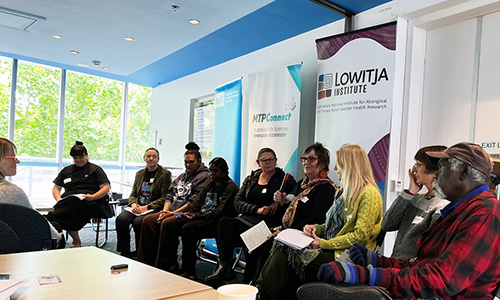
Held at the Koorie Heritage Trust, this event brought together health researchers, Community and partner organisations from the Round 3 TTRA-funded projects nearing completion, together with government, philanthropic and other funders. The forum was a unique opportunity to bring together people working on the ground in Aboriginal and Torres Strait Islander health research, alongside those responsible for funding and enabling that work, to share the strengths and support the sustainability of Aboriginal and Torres Strait Islander research in diabetes and cardiovascular disease.
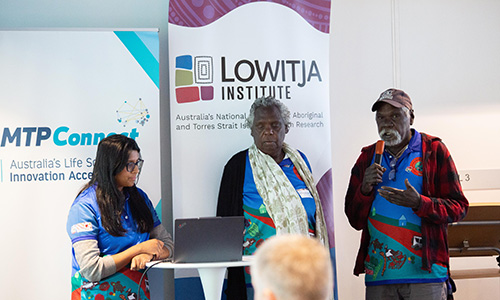
Photo: courtesy of Lowitja Institute
All of these projects have embedded Aboriginal and Torres Strait Islander leadership, Community empowerment, and First Nations ways of knowing, being and doing, demonstrating the powerful outcomes that can be achieved when research is place-based and Community-led. The projects have been closely supported and mentored by TTRA Partners, the Lowitja Institute and AusHSI, experts in First Nations research and implementation science, respectively.
Researchers leading Aboriginal and Torres Strait Islander health studies were able to showcase their work, share insights from their projects, and highlight the positive impacts that their research has had on the health and wellbeing of Aboriginal and Torres Strait Islander communities.
We heard about a Yolŋu-led, family-centred mobile health service for improving cardiometabolic health; a peer education support for young people with Type 2 diabetes in the Big Rivers region; and a holistic model of care co-designed for pregnant women in South Australia experiencing cardiometabolic complications.
The event provided a platform for funded projects to communicate their knowledge to a broader audience, while creating a space for project teams to engage with potential funders and explore the long-term implementation of research findings. It also helped to foster new relationships and strengthen existing networks with funding bodies, enabling discussions around better, more sustainable funding strategies, beyond the current stop-start cycles that exist.
By creating a space for project teams to share both their successes and challenges, participants were left with a deeper understanding of how research programs can be designed and delivered in ways that place Aboriginal and Torres Strait Islander communities at the centre, leading to better outcomes. It also highlighted the critical importance of strong partnerships between researchers, the communities they work with, and research funders in achieving meaningful and sustainable impact.