


From Coast to Bush: Improving mental health service access for Australia’s rural and regional youth
By Ross Driver, AusHSI PhD Scholar
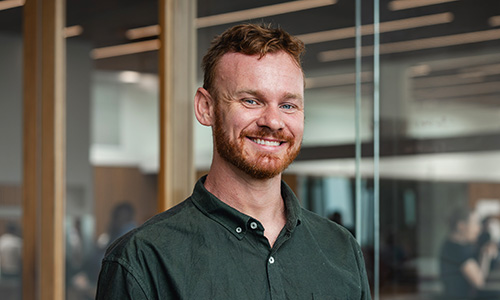
My journey with AusHSI feels like one that has been years in the making. But if I had to pinpoint a specific event that started it all it would be when I moved to Dubbo in 2019 to undertake my first job as a newly graduated social worker.
I worked in the child and adolescent mental health team there for 20 months as a mental health clinician. In my role, I had the privilege of engaging with children and families who often faced unique problems accessing mental health care in regional areas, including long travel distances to attend appointments and limited availability of specialist mental health care options. I also operated a fortnightly outreach service for children and young people in the rural town of Coonabarabran, where I was further exposed to the difficulties of youth accessing mental healthcare in rural contexts, such as isolation.
Living and working out bush was initially unfamiliar to me. Having grown up in the vibrant Central Coast region of New South Wales – colloquially known as “Cenny Coast” – it was an adjustment moving to a town 400kms away from the nearest beach or major city. Fast forward to now and I’m proud to say I have successfully practised as a social worker in a variety of metropolitan and rural settings, including abroad in Scotland.
Optimal access to much needed mental health care for our nation’s rural and regional youth has been an issue present on my mind the last few years. In 2022, during my master’s program, I completed and published a scoping review of the factors informing mental health service accessibility for rural and regional youth in Australia. Undertaking this research helped me realise that more work needed to be done to expand mental health service access for young people in these areas, and my drive to continue researching the issue only grew stronger.
The aim of my PhD project is to develop a model of care that improves mental health service access for young people in rural and regional Queensland. Under the supervision of Associate Professor Zephanie Tyack and Dr. Bridget Abell, my research builds on findings from The Bridging Study – an evaluation study of the Navicare mental health navigation service. The Navicare service was developed to support residents in the Isaac and Greater Whitsundays region with mental health care navigation, however initial service mapping data found young people in the region were in need of youth-specific mental health support. Using qualitative approaches, I will analyse the existing landscape of mental health supports available to young people in this region, and explore what factors impact access to mental health services. I will use implementation science frameworks and approaches to guide my analysis of contextual factors affecting youth mental health service delivery in rural and regional Queensland. Understanding these access and contextual factors will then inform co-construction of the care model in consultation with key stakeholders.
It’s a big task, but undertaking my PhD at AusHSI has been nothing short of an exemplary experience. The support I receive from staff and students alike is second to none. I feel fortunate that I get to work alongside passionate researchers who share my vision of seeing some of our nation’s most vulnerable youth being able to gain access to the support they need, and I’ve never been more excited than now to see what the future holds for rural and regional mental health research.