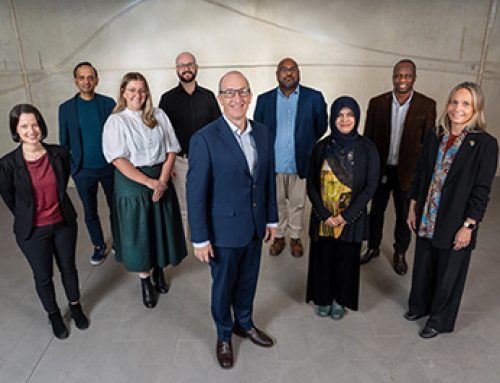

Researcher spotlight: Belinda Lange
Read our Q&A with Belinda Lange, who recently joined AusHSI as Professor of Health AI. Highlighting QUT’s commitment to advancing responsible AI in health, Belinda’s appointment forms part of an exciting cross-faculty initiative with the Faculty of Engineering to increase capacity and collaboration in Health AI.
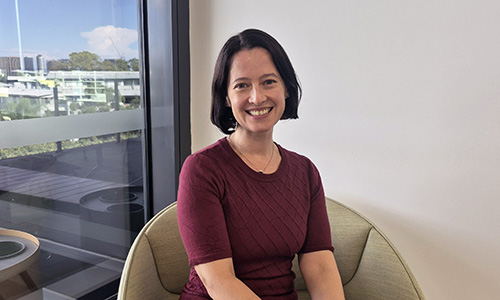 What expertise do you bring to AusHSI and what has been a highlight of your career so far?
I bring experience spanning clinical care, digital health and AI. I originally trained as a physiotherapist, which means my work has been shaped by the realities of clinical care such as time pressures, system complexity, and, most importantly, the needs of consumers and families.
Most of my career has focused on how technology can genuinely help people, how it can fit into everyday healthcare and how clinicians can use technology to improve the care that they provide. I’ve worked on tools ranging from virtual reality for rehabilitation to online tools and AI systems that support consumers and health professionals.
A highlight of my career has been seeing ideas move from research into practice. It is rewarding seeing a technology you helped develop used by clinicians or helping someone feel more confident managing their health. Those moments reinforce why this work matters.
How can AI enabled health technologies improve health services?
Imagine a healthcare system that’s more accessible, personalised, and efficient for everyone. That’s the promise of AI-enabled health technologies. At its best, AI can analyse huge amounts of information, support clinical decision-making, or even reduce administrative burdens like paperwork, freeing up clinicians to spend more quality time with people.
Beyond hospital walls, AI tools can extend care directly into people’s homes, helping them stay on track with rehabilitation programs or giving timely advice and guidance. This is particularly important for people in rural or remote areas, or people who face barriers to accessing regular services. Importantly, AI should support human care, strengthening connection, rather than taking it away.

What inspires you most in your research?
I’m inspired by seeing research make a real difference in people’s lives. That might mean helping someone recover after illness or injury, supporting mental wellbeing, or giving people tools to better manage long term conditions. I’m also motivated by working with clinicians, patients, carers, students and industry partners. Some of the best ideas come from listening carefully to people who use or provide health services every day and then co-designing solutions together that meet their needs.
Why is research in Health AI important?
AI is already entering healthcare, but without proper research we’re navigating a complex landscape without a map. We need to be sure AI is safe, fair and useful. Health AI research helps test what works, what doesn’t, and where it might best fit. It also helps make sure new technologies don’t increase inequality or create new problems. By doing careful research, we can build AI that people trust and that improves current care pathways or changes the way we do things for the better. This is why Professor Olivier Salvado in the Faculty of Engineering and I are establishing the AI in Health Research Network at QUT.
What are the main AI challenges facing Australia’s health system?
One major challenge is moving from exciting ideas to widely adopted, effective tools that actually work in real health services. This involves making sure different systems can seamlessly talk to each other, that people’s data is handled with security and privacy, and that health professionals are fully supported and trained to use new technologies.
Another significant issue is trust. Australians need confidence that AI in healthcare is reliable, transparent, and focused on their wellbeing. Addressing these complex challenges will need authentic collaboration between researchers, health services, policymakers, and the community. This collaborative spirit is where QUT’s AI in Health Research network will play an important role, supporting the partnerships needed to build a trusted and effective AI-powered health future for Australia.