
More than a thesis – growing through mentorship and collaboration
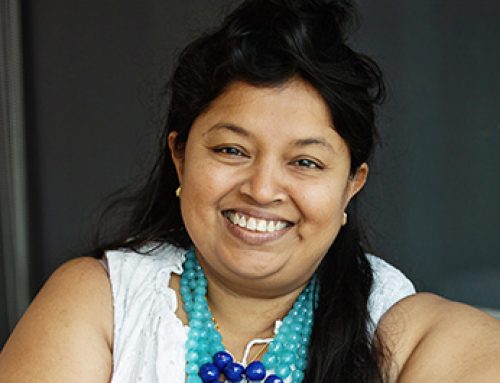
By Sam Borg, AusHSI PhD Scholar
I came into my PhD having already spent several years in research. When I started at QUT, exploring opioid use after spinal cord injury, I thought I was signing up to learn new methods, generate outputs, and deepen my expertise. And while all of that has been true, it’s not what has stayed with me most. What I didn’t expect was how much a PhD would shape the kind of person and academic I want to become.
A PhD is often described as supervised training, and it is. But more than anything, it’s your journey. It’s where you begin to step into being an academic in your own right. That means thinking beyond outputs and asking: what is the impact of this work? Who does it matter to? And how do I make sure it reaches them?
For me, that has meant building connections with clinicians, other researchers and industry partners. It has meant recognising that even the most robust, novel research has limited value if it doesn’t resonate with the people working on the ground. Learning to listen to those perspectives has been one of the most important parts of my PhD. It hasn’t always been easy to make those connections, and I’m still a little surprised when people recognise me or my work out in the wild at academic events.
Something else that stood out to me during my PhD was the people who make research environments work. They were not always the most senior or the most published but are those who are generous with their time, who answer questions without hesitation, who prioritise research integrity and who lift up others around them. They create space for newer researchers and make what can feel like an intimidating world easier to navigate.
I found myself wanting to be like that. Despite having always been quieter and more introspective, my PhD pushed me to step into those values. I took on roles I hadn’t anticipated like becoming president of a student social club, contributing to peer processes and supporting others with their research. Through peer mentoring, and simply by being available to those earlier in their journey, I realised that leadership in research isn’t about seniority. It’s about willingness. Willingness to help, to share, and to bring others along with you.
My PhD has taught me a lot about opioid use after spinal cord injury. But just as importantly, it has shown me that becoming an academic isn’t just about the work you produce. It’s about how you approach impact, how you connect with others, and how you support the people around you. That, more than anything, is what I will endeavour to carry forward into my career path.
About my research
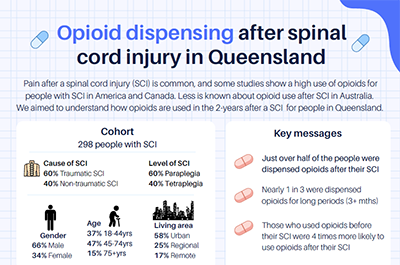
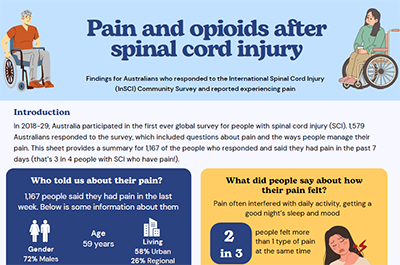
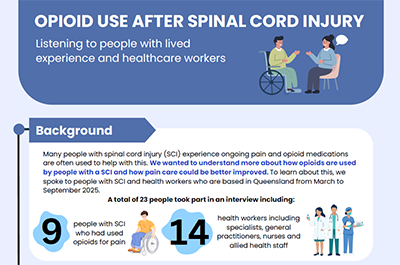
My research used different methods (data linkage, large survey data, qualitative interviews) to generate evidence about how opioids are used after spinal cord injury in Australia. Overall, my research highlighted the many challenges of needing to balance effective pain relief with the potential for opioid harms, the difficulty of managing varied and severe pain, and the system barriers that limit good pain care across the health system. Through my research, it was clear that improving access to non-pharmacological pain management options, supporting clinicians, and strengthening care coordination are essential to helping people with spinal cord injury better manage pain and improve their quality of life.
Published studies
To find out more, explore the visual summaries I have created for my PhD studies: