
More than “Just a Statistician”
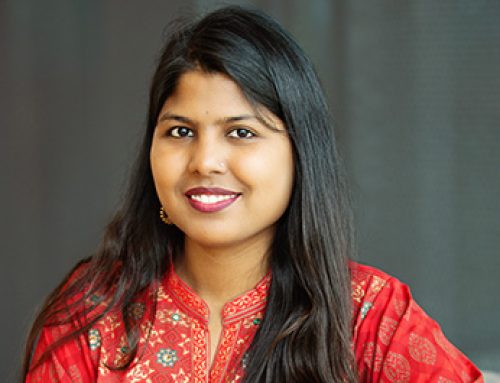
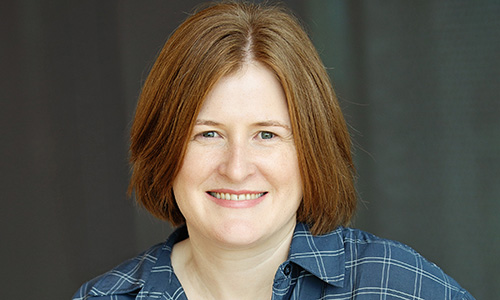
By Nicole White, AusHSI Statistician
Every statistician remembers when they were first asked for advice by a colleague or collaborator. For me, it was shortly after starting my first postdoctoral research appointment.
I was invited to a meeting about a new project exploring how the brain communicates with the muscles involved in walking, and whether these dynamics differ between people with and without a history of falls. I saw it as an opportunity to apply years of technical training to a problem where the answer was not yet known. I had always been drawn to health research, and this felt like a meaningful way to contribute.
After learning more about the biology and how the project came to be, I was asked:
“How many participants do we need to find a difference between the two groups?”
It was an unassuming question at face value about working out a recommended sample size. Yet I could not find the words to answer it on the spot. My experience with sample size calculations at that time had been one example in a first-year undergraduate statistics lecture. Imposter syndrome quickly set in. I left the meeting thinking, “Is it just me?”
Fifteen years on, and these conversations are now second-nature. While my technical knowledge remains essential, I have come to recognise that this knowledge alone is not enough to build a career as a statistician. Informal discussions with colleagues and mentors have also reassured me that my earlier, somewhat embarrassing, experience is both common and understandable, reflecting a lack of exposure rather than a lack of ability.
My current role involves leading analyses across several clinical areas, including critical care and infection prevention and control. Even though the applied context is different, the professional skills I rely on remain the same. These skills include asking the right questions, building trust with collaborators, and balancing my time between my own research and contributions to other projects
Sometimes, I apply these skills to navigate differences in opinion by understanding perspectives and effectively communicating the strengths and weaknesses of different methods. In other cases, it is having the confidence to say ‘No’, ‘Not right now’, or ‘I don’t know, but I can find out’. These and other leadership skills are too often relegated to incidental, on-the-job learning. It doesn’t have to be this way.
The rapid uptake of AI presents new challenges for how we advocate the value of our expertise to others.
These topics have motivated our inaugural Essential skills in statistics leadership in consultancy and research symposium, being held on 9 and 10 July. This two-day symposium has been made possible thanks to funding from the Australian Academy of Science Theo Murphy Initiative Flagship program.
Our program is now live, featuring international and national keynote speakers and themes covering cross-disciplinary communication, building a leadership profile, strategies for progressing to a team leader role, and perspectives on sustainable models for statistical consulting.
 The symposium also features interactive sessions on effective networking and communication, as well as a priority-setting exercise to identify key leadership skills and resources needed to support the next generation of Statistics leaders. We are also delighted to welcome David Gruen – the ABS Chief Statistician – who will open the event.
And what statistics event wouldn’t be complete without collaboration?
We are excited to be co-hosting this event with the Methods and Implementation Support for Clinical and Health Research Hub, at the University of Melbourne. This collaboration has made it possible to host this event in parallel at locations in Brisbane and Melbourne, to maximise opportunities to participate closer to home.
Leadership is often framed as taking bold actions and holding everyone’s attention in a crowded room. But it’s often the seemingly small, everyday actions that we learn from one another that lead to lasting impact. By creating space for these conversations, we hope to support the next generation on their career journey to become more than “just a statistician”.