
The worlds we are given: What my PhD taught me about health and choice
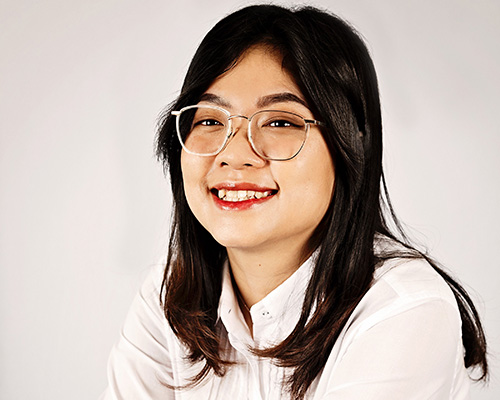
By Linh Vo, AusHSI PhD Scholar
Growing up in Vietnam, I did not know what a health economist was. But I understood early that health and wealth chase each other in a loop. People who fell ill often fell behind, and people who fell behind often stayed sick. Yet those caught most tightly in that loop were usually the furthest from care – too far from the right hospital, too busy surviving to sit in a waiting room, or too invisible to be asked what they needed.
Years later, in an undergraduate economics class, I encountered the idea that shaped my discipline. In 1972, the economist Michael Grossman[1] proposed that health is a form of capital. Like education or savings, it is a stock we hold, drawn down by illness and time, built up through the choices we make. An elegant idea. I underlined it, filed it away, and never noticed what it quietly took for granted.
When I began my PhD studying virtual care, its promise felt made for the people I had grown up watching struggle to access care. If care could travel through a screen or a phone line, then distance, transport, time off work, all the old barriers, might simply dissolve. The pandemic had just forced health systems to try it at scale. My job was to ask the question beneath the rush – does virtual care actually deliver value, and crucially, for whom?
At first, the answers were encouraging. I evaluated a virtual Hospital in the Home service in which people with COVID-19 were cared for at home rather than in hospital wards. It appeared safe, saved money and let people recover close to the ones they loved. But I also noticed something quieter in the data: that almost every patient spoke English, and even those from disadvantaged areas were people the system already knew how to reach. This did not mean virtual care had failed. It simply made me wonder for whom a screen does not automatically make healthcare easier to access.
So I followed the loop to one of its furthest edges: prisons, where people face some of the greatest barriers to healthcare and where a screen may be the only realistic bridge to a doctor. For the first time, people inside would be asked what good virtual care should look like, through a survey built entirely around choices between imperfect options.
Partway through, sitting in clinic rooms behind heavy metal doors, I began to doubt the whole endeavour. My method assumed a person with genuine agency. Yet my participants lived in a world where movement, communication, even access to a doctor were decided by someone else. Was it meaningful, was it even ethical, to ask people to choose, when their days were defined by the absence of choice?
What shifted my thinking was a comment from one participant, who described the task as “choosing a less evil world in both”. Confinement had not stopped her from weighing up what mattered the most, which is being listened to, respected, and recognised as someone whose health counts. Constraint doesn’t erase what people value. It only narrows the worlds they’re allowed to choose between.
Grossman was right that health is capital. But beneath it lies a deeper stock that my participants lacked – the freedom to choose how to build it. Poverty does not just empty wallets. It takes away the choice of doctor, of treatment, of whether to seek care at all. Then comes sickness, which doesn’t just weaken bodies but also strips away everything that choosing depends on – the income that buys options, the energy to navigate the system, the strength to plan beyond today. Each turn of the loop shrinks a person’s room to choose. The loop I want to break now isn’t a loop between money and disease. It is also a loop of fading choices, leaving people to choose between worse and less worse. Access, I came to see, is never only about distance but more about whether people are left with real choices and care worth choosing.
I submitted my thesis without managing to break the loop. But I leave this PhD asking a question I like better: how do we design care that expands the worlds people get to choose between, so that one day, no one, has to pick the less evil one?