

Congenital Heart Disease Long-term Improvements in Functional Health+
(CHD LIFE+)
Synopsis
Why the research project is important
 Congenital Heart Disease is one of the most common conditions for children to be born with, affecting one in a hundred live births. Unfortunately, children born with the condition are at higher risk of neurodevelopmental challenges, developmental delays and other learning and behavioural difficulties. These challenges can be mild but affect multiple areas of development and new issues can emerge over time.
More recently, clinicians from Children’s Health Queensland have developed care pathways for children with Congenital Heart Disease, called CHD LIFE, to help them overcome developmental obstacles and improve their functional health.
CHD LIFE+ was a research project that aimed to systematically use information from the CHD LIFE care pathway to better understand, develop and apply new models of long-term neurodevelopmental care.
What the research sought to do
The project evaluated existing and potential models of care for CHD neurodevelopmental support, nationally and internationally, to inform future practice, and tested simulated models of care for suitability across the country and identify which models fit local need.
Investigators worked with study partners, families, and services to co-design and cost models of care to identify best practice long-term neurodevelopmental care options for their jurisdiction.
Leading the program were researchers at the Australian Centre for Health Services Innovation (AusHSI), QUT, in partnership with Queensland Paediatric Cardiac Services and Children’s Health Queensland.
CHD LIFE+ also funded five national partners to complete local projects supporting the design of effective models of care to support the long-term developmental needs of children with CHD. Projects aimed to address local priorities and needs while also informing and supporting the broader CHD LIFE+ study objectives.
At the end of the project, a national priority setting meeting brought together people with lived experience including adults with CHD and parents, advocates, researchers, health service providers, and other key people to guide new projects, funding, and care to improve outcomes for children with congenital heart disease (CHD) and their families. The meeting focused on defining clear priorities and practical steps for better neurodevelopmental care and research, and provided a safe space for people to share personal and professional experiences.
Research outcomes and impact
The program of research will support the national establishment of accessible, family-centred, sustainable and best-practice neurodevelopmental models of care for children with CHD and their families.
Jurisdictional projects delivered local landscape mapping and preliminary design of models of care that are fit-for-purpose and address the needs of children and their families.
A Community of Practice (CoP) established by the CHD LIFE+ program continues to meet and focus on neurodevelopmental follow-up care for children with CHD in Australia. The CoP is looking to continue with fresh focus and purpose, guided by the priorities set at the national meeting.
Jurisdictional projects
The CHD LIFE+ program included funding five paediatric cardiac services around Australia to complete a project to inform the design of a local neurodevelopmental model of care for children with CHD. Find out more:
Funding Body
This program of research was funded through an MRFF Congenital Heart Disease Grant (ARGCHDG0035) 2020-2024.
Publications
Meeting Report: National priority setting meeting in cardiac neurodevelopmental care
The Cost of Neurodevelopmental Disability: Scoping Review of Economic Evaluation Methods
Further Details
Co-designing Sustainable Cardiac Neurodevelopmental Models of Care for Children with CHD.
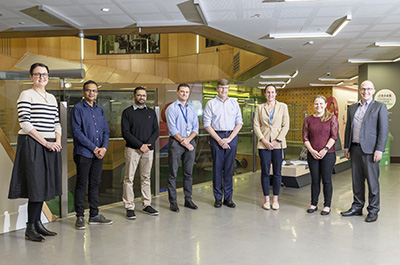
PICTURED ABOVE (L-R): Karen Eagleson, A/Prof Sanjeewa Kularatna, Dr Sameera Senanayake, Dr Ben Auld, A/Prof Rob Justo, Jenna English, Dr Bridget Abell, Prof Steven McPhail, Queensland Children’s Hospital